

A new and convincing scam is targeting nearly 90 million Netflix users. Fraudsters are sending text messages and emails that appear to come from Netflix, claiming your recent payment failed and urging you to update your information to avoid losing access to your account.
These messages look authentic 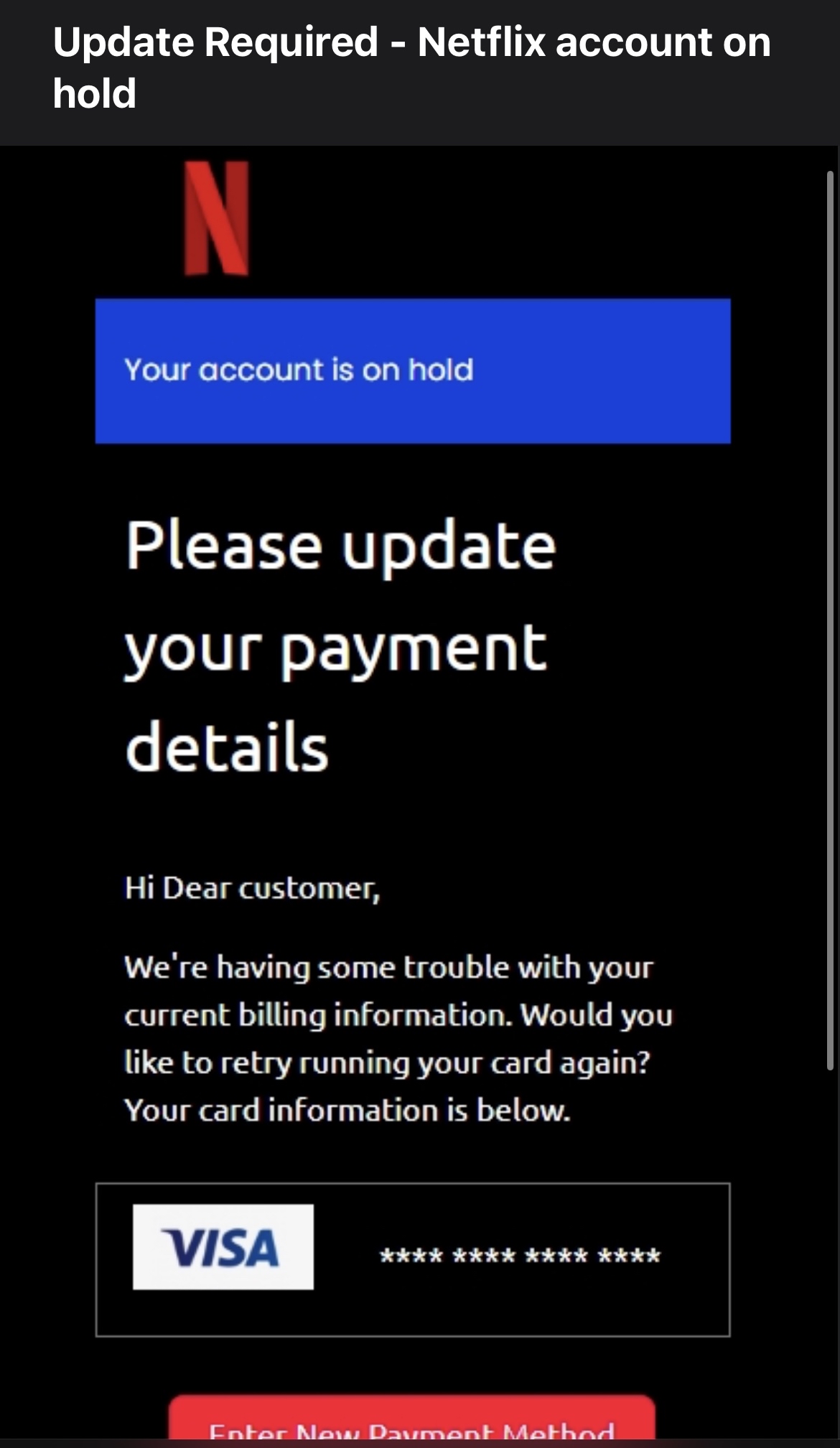 using Netflix‑style logos, colors, and formatting, but they are completely fraudulent. Clicking the link and entering your information can give scammers immediate access to your financial accounts, allowing them to steal money within minutes.
How the Netflix Scam Works
Scammers are sending messages through text, email, and WhatsApp that:
- Claim your payment method was declined
- Warn that your account has been suspended
- Urge you to “update your details” to continue service
The link included in the message leads to a fake website designed to look like Netflix. These fraudulent sites often request:
- Credit or debit card numbers
- Personal information and home address
- Full banking details
Once you submit your information, scammers can begin making unauthorized transactions right away.
How to Verify Whether a Message Is Really From Netflix
If you receive a message asking for your Netflix login, phone number, password, or payment method, it is almost certainly a scam. Netflix will never ask you to update payment information through a link sent by text or email.
To safely check your account:
- Open the official Netflix app
- Or type netflix.com directly into your browser
Never click links in suspicious messages.
Other Scams Currently Targeting Consumers
Fraud attempts come in many forms. Here are additional schemes to watch for:
Impersonation Scams
These include the “grandparent scam” or urgent messages from someone pretending to be a relative in trouble abroad.
Stay Safe:
Pause before responding. Contact your family member using a known phone number. Don’t let scammers pressure you.
Phishing Emails and Themed Cons
Be cautious of unexpected messages about:
- Concerts or event tickets
- Sweepstakes
- Unpaid tolls or E‑ZPass charges
These often contain malicious links designed to steal your information.
Stay Safe:
Avoid clicking any unexpected message, especially from unfamiliar senders.
Red Flags That Signal a Scam
Watch for these common warning signs:
- “Free” vacations that require upfront payment
- Vague or missing trip details
- Requests for wire transfers, gift cards, or cryptocurrency
- High‑pressure tactics demanding immediate action
- Deals that seem too good to be true like luxury rentals at bargain prices
How to Protect Yourself: Three Simple Steps
1. Slow down and read the fine print.
Never sign or send money until you fully understand the offer. Always request cancellation and refund policies in writing.
2. Do your homework.
Search the company name with terms like scam, review, or complaint. Verify addresses, and if it’s a resort or rental, call directly to confirm the booking.
3. Use secure payment methods only.
Avoid wire transfers, gift cards, or cryptocurrency. These forms of payment are nearly impossible to recover if fraud occurs.
Think You’ve Been Targeted? Act Quickly
Report suspected scams to:
- The Federal Trade Commission: ReportFraud.ftc.gov
- Your state attorney general’s office
And remember: Self Reliance Financial Federal Credit Union will never call, text, or email you asking for your PIN, password, or full Social Security number.
If something feels off or if you believe you’ve been targeted, contact us right away. We’re here to help you stay protected.